Pages

Tuesday, August 25, 2015

Slice of Life: A Breath of Fresh Air


I worked today.  All day.  I am not used to spending so many hours inside.  I have spent the summer trying to soak up as much sun and breath in as much fresh air as possible.  Here in the northeast we haven’t seen much of the sun in the past few days.  Finally, the clouds broke mid-morning and the sun shone.  I snuck outside for a beach chair lunch break, but other than that I did not see much of the sun at all.  Inside the air conditioner was too cool.  I sat behind a conference table for much of the day.  I definitely wasn’t used to it, but I have no right to complain.  I was lucky this summer to have so much time to lounge at the beach, ride my bike, and eat lunch outside – to soak up the sun and breath in the fresh air.

I also won’t complain because I got to spend the day talking to potential substitute teachers.  In my district, those who apply to become substitute teachers are interviewed before they can be put on the substitute list.  Since administrators are busy with other school-related matters, there is a group of teachers with administrator certifications who have been asked to complete the task.  Being one of those teachers, I had the opportunity to interview about a dozen individuals interested in substitute teaching in my district.   The questions asked during the interview are basic, intended to find out information such as the applicant’s experience working with children and knowledge of classroom management strategies.  The purpose of the interview process isn’t to choose the best candidates, but to ensure that those who are being hired are suitable for the job.

My favorite question today, easily became this one: Why do you want to become a substitute teacher in our district?  This is the question in which the applicants’ passion and enthusiasm showed through the most.  I was told, “I love working with children” and “The classroom is the most rewarding and enjoyable place to be.”  One woman, with children of her own in the district, who I interviewed told me she started volunteering at her child’s school and realized she wanted to be a teacher.  A recess monitor in the district explained that she started working at the school she’s employed and then, “fell in love with the children.” A teacher out of the classroom just a year after retiring stated, “I miss the children.”  These responses felt, to me, like a breath of fresh air. 

Not too long ago, I read an article about a survey that was done and the results showed that teachers’ morale was at an all-time low.  There is no shortage of reasons to explain this if it is true.  Teachers in my district have been overloaded with new curriculum.  There is the pressure that comes with high-stakes testing.  New evaluation systems are placing more emphasis on test scores.  I could go on, but I won’t.  The interviews today reminded me of the ultimate positive of the teaching profession.  Those who I interviewed want to do a job for which they will not get paid much.  A job, in which they will not know what they are being faced with day-to-day.  A job that many days they will receive very little appreciation.  But they all want to do the job and for a similar reason: the children.  The response to this one interview question is a reminder of the passion that surrounds teaching and the necessity of focusing on the real purpose.


Tuesday, August 18, 2015

Slice of Life: Thinking About Scaffolding


I have been playing tennis for over a decade.  I still feel I have a lot to learn to improve my game, so about once a year, I sign up for a tennis clinic to get some tips on what could make me a better player.  I am always amazed at how well the instructors can pinpoint exactly what I am doing incorrectly after watching me hit just a few balls.  Just like what good teachers do, the instructors give me feedback – they tell me and then show me what I should be doing instead.  At one of the last tennis clinics, the instructor told me I needed to follow through with my racquet when hitting the ball.  He demonstrated how to swing the racquet from his right side, all the way around to the left where it contacted with his other hand.  When I still wasn’t doing it exactly right he went through the motions with me – guiding my arm with his as my racquet swung around my body and I caught it with my other hand.  As I ran through the practice drills he’d remind me, “Catch your racquet.” 

Other times, it’s been my feet that needed improving.  I’ve always run for the ball and swung, concentrating on reaching the ball and hitting it with my racquet, but with no regard for what my feet were doing.  According to my instructor, I was supposed to run, stop my feet, and then swing.  His teaching routine again consisted of explaining and showing me how it worked.  Throughout the follow-up practice he’d monitor the movement of my feet and if my technique was incorrect remind me of what I should be doing with, “Plant your feet, then swing.”

Throughout the tennis clinics, I see proof that these small changes to my technique can improve my game.  As I follow through with my racquet the ball has more force behind it and more often lands where I want it to on the other side of the court.  As I stop my feet and then swing, I’m more likely to hit the ball inside the opponent’s court rather than send it sailing out of bounds.  I always leave these tennis clinics knowing what I need to do to work on to be a better tennis player.  As I then play tennis matches in a non-instructional setting, I find myself repeating the words of my instructor.  I swing for the ball and the voice in my mind says, “Catch your racquet.”  I run up to the net for a short ball and hear myself say, “Plant your feet, then swing.”  When I swing, hit, and make an error, I think about what I did incorrectly – was I following through with my racquet, did I remember to stop my feet?  Whatever the error, I repeat the corresponding refrain in my head the next time I attempt to hit the ball.     

Following through with the instructor’s tips is much easier in the context of the clinic where someone is monitoring my progress, providing instruction and feedback, and reminding me of what I should be doing.  Repeating the phrases I’ve heard my instructor say to me, help me actually engage in the proper techniques when I don’t have a person to coach, guide, and support me along the way.  These phrases I repeat in my head and allow me to take what I’ve learned and do it on my own are similar to what Terry Thompson describes as “focus phrases” in his book The Construction Zone: Building Scaffolds for Readers and Writers.”  A focus phrase is the goal for the student’s learning, but also serve as reminders that become the self-talk students engage in to become independent with the skill they are learning (Thompson, 2015).    

Using a focus phrase within instruction is just one way of scaffolding learning for students and keeping focused on the instructional goal.  Thompson has lots to say about scaffolding in his book, which is all so valuable, and I’ve begun to reflect on the effective use of scaffolding.  One of the important reminders I’ve taken from the book is that scaffolding is intended to provide supports, but temporarily, so that ultimately students can be independent.  My tennis instructor didn’t continue to do the work for me.  If he continued to hit the ball for me in demonstration or stand near me and physically help me carry out the motions I would never take on the techniques independently.  Instead, the responsibility for using the techniques I learned was released to me, as the simple reminders that were repeated often enough, became part of the inner conversation that accompanies me the next time I play on my own. 

No matter the skill or technique students are learning, the goal is independence.  The Construction Zone has helped to remind me to provide appropriate scaffolds and to be flexible in the their use so that students don’t continue to rely on the teacher, but instead take responsibility for their learning and become independent.  Thompson states, “If we truly expect readers and writers to take over, then we have to start shifting our teaching in a way that purposefully passes the instructional baton” (Thompson, 2015, p. 154).  Being mindful of scaffolding and how it is supporting students in taking on skills and strategies independently is essential.  Whether students have been taught a focus phrase or another strategy for scaffolding has been used, in the end, students should be doing the work.  This is when scaffolding is truly is effective because learning has occurred. 


Thompson, T.  (2015).  The construction zone: Building scaffolds for readers and writers.  Portland, ME: Stenhouse.

Monday, August 17, 2015

It's Monday! What Are You Reading?

It’s Monday! What Are You Reading? is a community of bloggers who link up to share what they are reading.  For more information check out the host blogs: Teach Mentor Texts and Unleashing Readers.

What I Read This Week…


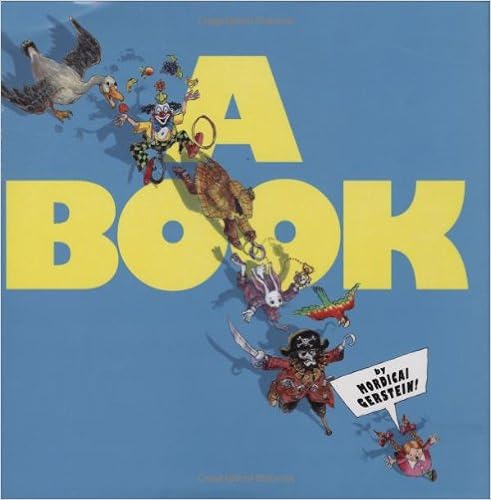
A Book by Mordicai Gerstein

This is a story of a family who lives in a book and a girl searching for her story.  The story is told through the main text, illustrations, and speech bubbles.  This is a fun story as the girl goes on an adventure through other stories as she looks for her own.  This book could also inspire writers since it ends with the girl deciding to write her own story. I love this picture book – it is a unique, clever tale.  

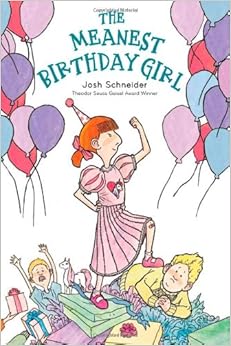
The Meanest Birthday Girl by Josh Schneider

This is a wonderful early reader chapter book.  Dana is a name-calling, dessert-stealing birthday girl at the beginning of the story.  She learns to change her ways and apologize thanks to a clever classmate and a big white elephant.  The book presents a theme that young readers, who have been teased or the object of another’s meanness, can relate to.  They will also be amused by the fantasy and humor that’s present throughout the story.  I have not read any of Schneider’s other books, but after reading this one I am definitely going to put his other titles on my reading list. 

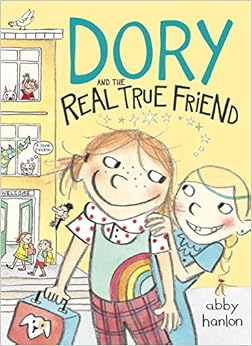
Dory and the Real True Friend by Abby Hanlon

This is the second book by Abby Hanlon featuring Dory, a child with a big imagination and a unique personality and style, whose family has nicknamed her Rascal.  In this book she is beginning school and is worried about making friends.  Readers are immersed in Dory’s dilemma at school and her attempts to make a real friend and the story of her imagined friends, including a monster and a fairy godmother.  This short chapter book for those just beginning to transition to longer text has humor, fantasy, and adorable illustrations.  This book is an essential for early elementary classroom bookshelves.  I will also definitely be checking out the first of the books about Dory, Dory Fantasmagory.   

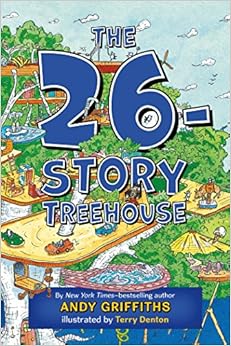
The 26-Story Treehouse by Andy Griffiths

With this book, I skipped right to the second of the Treehouse Series books, the first one being The 13-Story Treehouse.  I am always on the lookout for chapter books that will engage my upper elementary readers and I think this one will interest some of my reluctant readers.  Andy and Terry live in an amazing tree house that is now 26-stories tall and they write their own stories.  The stories they tell are far-fetched, include pirates and a Maze of Doom, and will make kids laugh.  There are lots of pictures in this book and many of the pages only range from a few lines of text to a few paragraphs.  This is perfect for my readers who haven’t yet built the stamina for lengthy chapter books.  I’m looking forward to sharing this one with my students. 

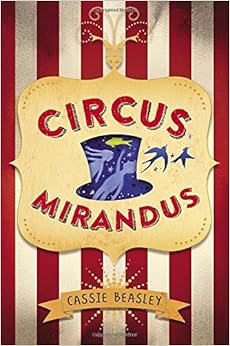
Circus Mirandus by Cassie Beasley

I finished this book the week before last, but haven’t written an It’s Monday What Are You Reading Post since so I’m including it here.  This book definitely lives up to all the hype.  It was one of the most engaging children’s books I’ve read in a long time.  There’s magic.  The magical circus that the plot revolves around draws readers into a world of fantasy and imaginiation.  There’s also a miracle.  Micah Tuttle is helping his dying grandfather get his one last miracle.  There’s also a surprise.  Micah thinks he knows the miracle his grandfather wants, but grandfather has his own idea.  If you haven’t read this one yet, definitely put it on your list.  Adults will love this book as much as children.


Tuesday, August 11, 2015

Slice of Life: Book Joy

A couple of weeks ago, it was a very hot day here on the coast of New England.  The temperatures remained in the eighties even in the evening, which is something that only happens a handful of times where I live.  It was a great night to be outside, so I put a book in my backpack, grabbed a towel, and hopped on my bike and rode down to the beach.  I spread my towel in the sand when I got there and laid down.  I soaked in the sunshine, relished the breeze, and read The Daring Ladies of Lowell by Kate Alcott. As I lounged in the sand reading, I was experiencing the present moment – a perfect summer evening with warmth, sunshine, and the background noise of the ocean.  I also drifted into the imaginary world of a young girl, in 1832, working in textile mill, suffering the deplorable conditions in exchange for a wage that brings her freedom and independence.  It was a perfect evening.  I was in one of my favorite places at one of my most favorite times of the year and I was getting lost in another place and time that I could only experience through the pages of a book.  

This is something I want my students to feel – the joy of being immersed in a story.  I want them to be engaged and excited as the books they read provide them with an experience beyond their world.  For me, my love of reading began when I was a kid.  I loved my frequent library visits in which I carried home a stack of books, always wanting to bring home more than the allotted limit.  I read every Sweet Valley High book I could get my hands on.  Whenever my teacher passed out a classroom book club flyer it was a big deal and I eagerly anticipated the arrival of the books I ordered.  Books have been an important part of my life and have brought me joy for many years.  Although some of my students have this same joy, there are others who do not.  As a reading teacher, I want to help instill this joy of reading in all my students. 

Although I love reading now and loved it as a child, there was a time when I didn’t do much reading.  When I was in high school, I remember a lot of assigned reading.  Many of the books my teachers’ assigned just didn’t engage me.  Maybe, if I read Walden now I would be much more interested, but it just didn’t do it for me when I was fifteen.  I was assigned books that I struggled to understand and had to reread over and over again.  If I reread Silas Marner today maybe I would enjoy it, but in high school I had a very hard time comprehending what I was reading.  I did not read books for pleasure beyond what was asked of me in school.  Sometime when I was in college I rediscovered my joy of reading.  I read mysteries and psychological thrillers and detective novels.  These were books I didn’t want to put down, so unlike many of the books I had been assigned to read in high school.  I hadn’t known these books existed.  I thought the world of “adult” reading consisted of the classics I read in high school, that often left me confused or bored.

My life as a reader has helped me to understand how important it is to offer students choice in their reading.  Great literacy teachers know this and find ways to provide students with opportunities to choose what they read, whether it’s during independent reading or literature circles.  Students are more engaged when they are able to choose books of interest to them.  Because of my own experiences as a reader, I also understand that students need to be supported and guided in order to find books that are of interest to them.  As a reader, I visit bookstores, read book reviews, and talk to friends about books.  I am aware of my book interests and I know how to find the books that fit these interests.  As a reading teacher, who wants to instill the joy of reading, my job is to help students find their reading interests, provide access to engaging books, and promote a variety of books and genres.  Through stocking my library with books related to my students’ interest and providing book talks I hope to support students in finding and reading books they will love.  One of my goals this year is to increase the amount of book talks that I conduct because I know there are many books my students will never find if I don’t lead them there.  If my students can find the joy in a book I have recommended than I am helping them to develop a great reading life.