Pages

Monday, October 19, 2015

It's Monday! What Are You Reading?


It’s Monday! What Are You Reading? is a community of bloggers who link up to share what they are reading.  For more information check out the host blogs: Teach Mentor Texts and Unleashing Readers.

What I Read This Week…
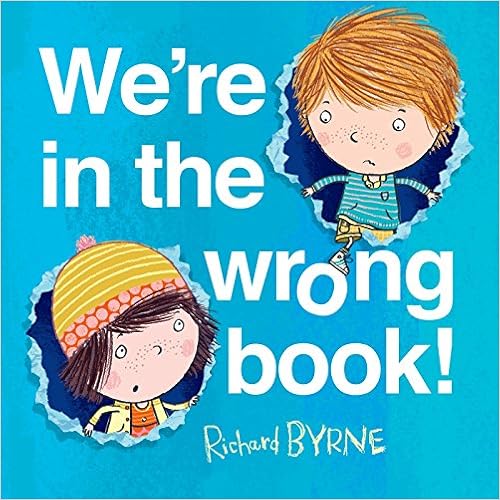


We’re in the Wrong Book by Richard Byrne

Bella and Ben get bumped out of their book by Bella’s dog. Throughout the book they try to find their way back.  They end up in many different types of books, including a counting book, a comic book, a book of mazes, and a familiar fairy-tale before they find their way back to their own book.  This is a unique and clever little book. 


Naughty Mabel by Nathan Lane

This is an amusing story of a very naughty dog.  Mabel is a free spirit.  She also loves a party.  When her owners throw a party, to which she is not invited, her antics cause a big commotion.  Readers will find great humor in how Mabel clears out an entire room after eating, “too many pigs in too many blankets.”  Mabel may be a naughy dog, but her family loves her all the same, as I’m sure young readers will also.   
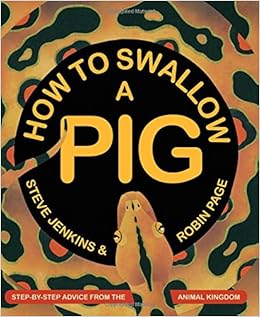

How to Swallow a Pig: Step-by-Step Advice from the Animal Kingdom by Steve Jenkins & Robin Page

Steven Jenkins has wonderful and interesting ways of writing nonfiction books for children.  This is no exception – the book is filled with instructions that explain the behavior of different animals.  Readers can learn how a humpback whales traps fish, a crow cracks a nut, or even how a vervet monkey warns of danger.  This book would be appealing to readers who wish to learn interesting information about wild animals.
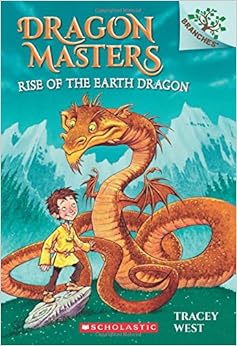

Dragon Masters: Rise of the Earth Dragon by Tracey West

This early reader chapter book is a quick read that includes pictures on every page.  My reluctant readers tend to like chapter books with adventure and an imaginative plot that holds their attention so this is a book I would recommend to many of them.  The book tells the story of Drake, and three other children, who have been chosen by the king to train dragons.  This is the first book in a series that is written to support students who are beginning to read chapter books.


The Story of Diva and Flea by Mo Willems

Not only did I get to read Mo Willems’s latest book, but I got to see him speak at Teachers College this past weekend during their Saturday Reunion event.  His speech was smart and funny, reminding us that the reader is the one who brings meaning to the story.  His latest book is an early reader chapter book.  The story takes place in Paris and tells the story of Diva, a dog who lives at 11 avenue Le Play, and Flea, a wandering cat.  Although they are very different from each other they strike up a friendship and learn from one another.  The illustrations, by Tony DiTerlizzi, are as wonderful as the story. 


Pip Bartlett’s Guide to Magical Creatures by Maggie Stiefvater & Jackson Pearce

Pip can talk to magical creatures.  This gets her into trouble with a unicorn so she is sent to live with her aunt who is a veterinarian at a clinic for magical creatures.  Pip becomes involved with helping her aunt rid the town of a magical creature that is causing problems for those that live there.  Throughout the book there are pages which are intended to look like those in the guide to magical creatures that Pip carries around with her.  I would recommend this book to readers who like mythical creatures, magic, or fantasy.
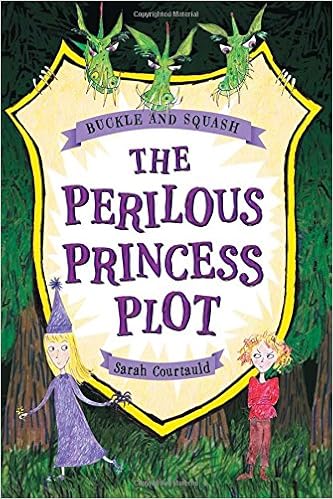

Buckle and Squash: The Perilous Princess Plot by Sarah Courtauld

The two sisters in this middle grade novel are very different.  Eliza is level-headed, but Lavender dreams of meeting a prince and becoming a princess.  When Lavender pretends to be a princess and Eliza goes in search for her an adventure begins. This story is a fun and quirky fairy-tale with a faithful goat, an evil count, a daring rescue, and a frightening dragon.  The writing is also interesting because the author includes may puns throughout the story.


Monday, October 12, 2015

It's Monday! What Are You Reading?


It’s Monday! What Are You Reading? is a community of bloggers who link up to share what they are reading.  For more information check out the host blogs: Teach Mentor Texts and Unleashing Readers.

What I Read This Week…


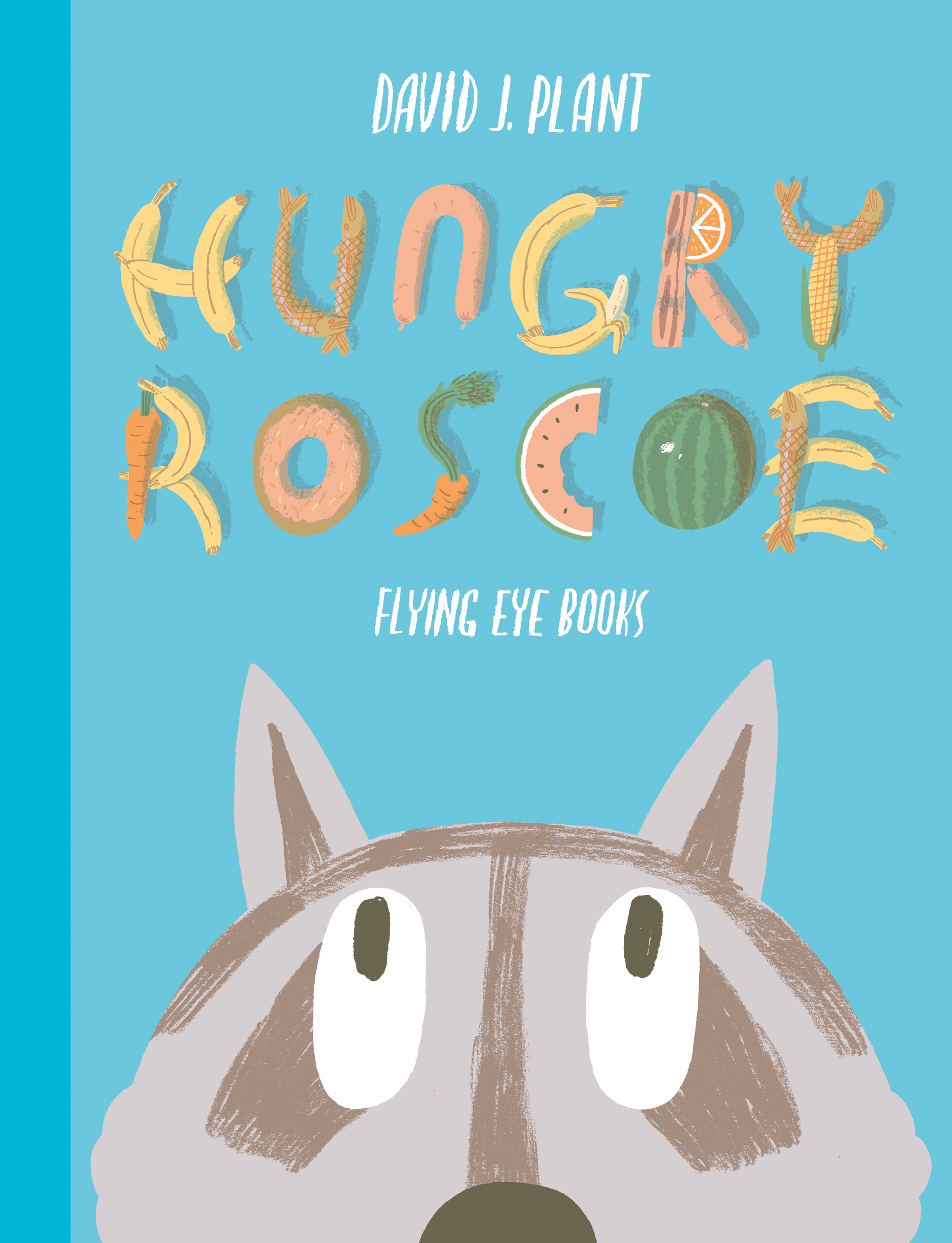
Hungry Roscoe by David Plant

Roscoe, a racoon, is hungry and tired of eating junk.  He goes in search of some fresh food at the nearby zoo.  He uses his creativity dressing up as some of the animals, but the zookeeper catches him.  Roscoe is finally able to get some food with the help of the monkeys, but it causes a little bit of mayhem.  Readers will be amused by Roscoe’s costumes and his persistence in trying to get what he wants.  It’s a fast-moving story to keep readers entertained.


I (Don’t) Like Snakes by Nicola Davies

Nicola Davies blends fiction and nonfiction in a story about a girl who says she doesn’t like snakes and her family who provides explanations about them, such as how they slither and the purpose of their tongues. The girl becomes increasingly positive about snakes as she learns new information about them.  Readers will learn a lot about snakes themselves by reading this book.  The format is perfect for capturing students’ interest and helping them learn about an animal who many typically dislike. 


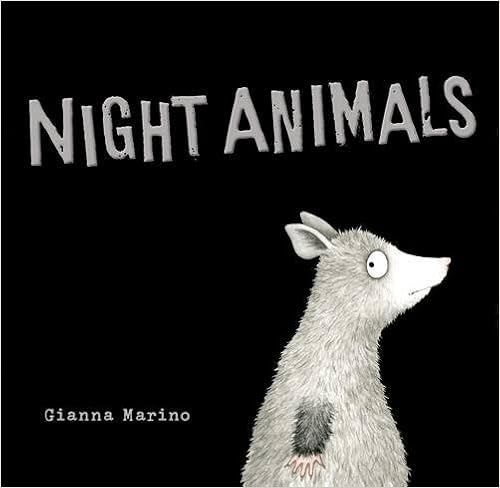
Night Animals by Gianna Marino

This picture book has great illustrations.  The animals are drawn amongst a black background to show that it’s nighttime.  One animal after the other becomes scared and they try to hide from the night animal.  Amidst their fears, the possum provides some comic relief by standing on his head and playing dead.  There is minimal text on each page as the story is told through dialogue between the characters.  The book addresses a common fear of some children, the fear of the dark, but in a humorous way. 


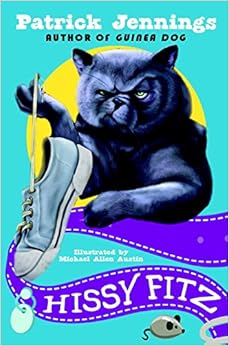
Hissy Fitz by Patrick Jennings

This is a chapter book for elementary readers about a cat named Hissy, a pretty grumpy cat who just wants a nap.  The book is written from the perspective of Hissy, providing insight about how cats may really feel about the interactions they have with humans.  There is a lot of action within the plot – Hissy must constantly escape Zeb, a three year-old who never leaves him alone, he battles a raccoon, and he joins in a game of cat soccer.  I recommended this to a student who had previously read Jenning’s Guinea Dog and he jumped at the chance to read it.  I think it’s a book many of my reluctant readers will enjoy since it has action and adventure and is a fairly quick read.    


Confessions of an Imaginary Friend by Michelle Cuevas

I greatly enjoyed reading this middle grade novel.  It is unique, endearing, and full of imagination.  Jaques Papier is an imaginary friend and this is the story of what happens when he finally realizes that he is imaginary.  There are parts that are funny and parts that make you think. It’s about a journey to find oneself and the desire to belong and not feel so invisible.  The author stated in an interview that she was inspired by Kate DiCamillo, Roald Dahl, and E. B. White.  There is much about Cuevas’s writing that matches that of these great authors – it’s beautiful, clever, and whimsical.  I just loved so much about this book.  It’s definitely been one of the best I’ve read recently. 

Monday, October 5, 2015

Teaching Persistence to Help Students Grow as Readers

I am just about finished reading A Mindset for Learning: Teaching the Traits of Joyful, Independent Growth by Kristine Mraz and Christine Hertz.  It is a very useful and practical professional text.  Mraz and Hertz discuss the habits of mind that students need to be successful, independent learners.  The habits, which they refer to as stances, that they feel are important to teach are: optimism, flexibility, resilience, persistence, and empathy.  In their book, they also discuss ways to help students build these habits.  These ways include using storytelling, setting goals with students, teaching self-talk, and engaging students in reflection.  There are so many useful ideas including ideas for lessons, anchor charts, and read alouds.  I would highly recommend this professional book.

Mraz and Hertz have inspired me to support my students independence by starting discussions about the habits of mind.  I decided to start with persistence.  In the book, persistence is defined in kid language in this way: “Having persistence means you try and try again even when it feels hard.” (Mraz & Hertz, 2015, p. 37)  I thought this habit was a good starting place since reading is something that is hard for my students and having a state of mind in which they understand that persistence will benefit them is essential.  Reading is a hurdle for my students in many ways and I want them to begin to think about how they can overcome their challenges through effort and hard work and the reading strategies we’ll discuss throughout the year.   

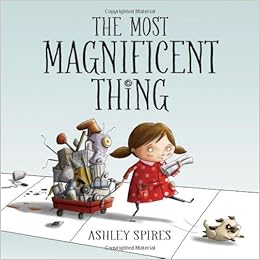
I used the structure recommended in the book to help students understand the concept of persistence.  This structure includes four steps: studying a text, discovering a concept, naming the concept, and reflecting on the concept.  I used a video and a read aloud as the texts.  I showed my students a brief video clip from YouTube (I started the video after the text at the beginning).  In the video, a dog repeatedly tries to get a head of lettuce off a counter and finally succeeds. I also read The Magnificent Thing by Ashley Pires.  In the book, a girl makes many attempts to create a magnificent thing.  She then gets frustrated and says she quits, but her dog assistant helps her realize she should try again.  In the end she does try again and is able to succeed.  I involved my students in a discussion about what they noticed about the dog from the video and the girl in the book and how they were the same and different.  The students discussed the fact that both the dog and the girl tried and tried again.  After this discussion, I introduced the students to the word “persistence.”  I had the students reflect on this concept by naming ways they have showed persistence.  Then I asked students to think about how this concept could be used in their reading.  Students were able to relate persistence to their lives, in general, and to their reading lives.  This is a habit of mind that we will need to revisit but this lesson started students thinking about the importance of persistence.

The anchor chart provides kid language to help students understand the meaning of persistence.
Students had many ideas about how they've shown persistence in their lives.
A fifth grader wrote about what it means to show persistence in reading. 
A second grader wrote about how she can show persistence in reading.
Mraz, K., & Hertz, C.  (2015).  A mindset for learning: Teaching the traits of joyful, independent growth.  Portsmouth, NH: Heinemann.

It's Monday! What Are You Reading?


It’s Monday! What Are You Reading? is a community of bloggers who link up to share what they are reading.  For more information check out the host blogs: Teach Mentor Texts and Unleashing Readers.

What I Read This Week…


I read two picture books about whales.  Both were narratives and told about rescue efforts to save a whale that was in danger.  Although telling very different stories, both books focused on the interaction between humans and animals and showed the vulnerability of such a large creature.


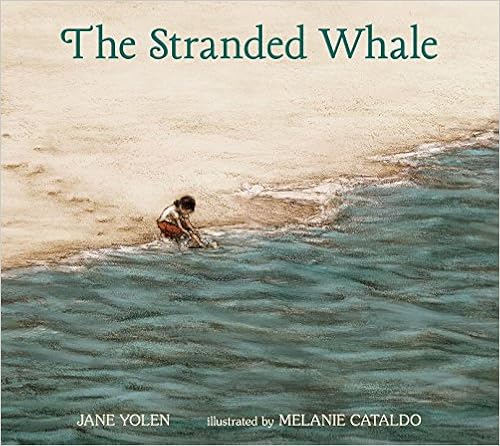
The Stranded Whale by Jane Yolen 

This story definitely pulls at the heartstrings.  It is set in 1971 and Sally and her brother are walking along the dunes when they discover a beached whale.  While they wait for help they try to keep the whale wet by wringing out their sweaters that they soaked in the ocean water.  Others come to help, but they are unable to push the whale out into the ocean.  Yolen writes beautifully, capturing the desperation of the situation and the anger and sadness Sally feels when the whale can’t be saved.  Yolen explains in the Author’s Note that the majority of stranded whales do end up dying, making this an honest and realistic tale. 

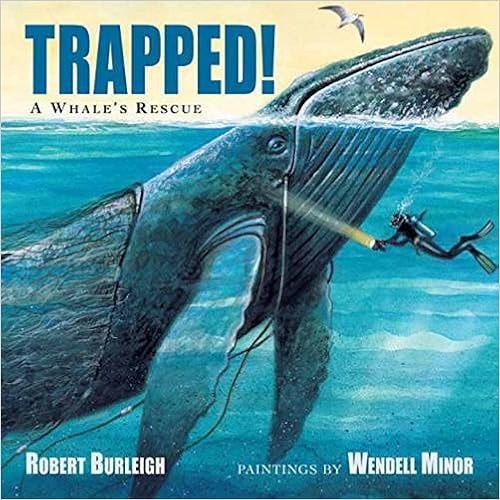
Trapped: A Whale’s Rescue by Robert Burleigh

This is a story, based on an actual event, in which a humpback whale becomes trapped in a fishing net.  Rescuers dive into the water to cut the ropes away from the whale’s body and soon the creature is free.  This text is also beautifully written, sounding almost poetic.  Readers will feel empathy for the whale and understand the danger the rescuers put themselves in to free the whale.  The illustrations are beautiful as well.  Information about the incident this story is based on and humpback whales is included at the end of the book.


A Tale of Two Beasts by Fiona Roberton

This picture book is divided into two parts, telling two very different perspectives of a story.  In Part One, "The Strange Beast", the girl recounts how she rescued a strange beast from the woods and brought him home.  In Part Two, "The Terrible Beast", the creature recounts how he was ambushed in the woods and taken to the girl’s lair.  The beasts see the world differently, but in the end they are able to get along with each other.  This book can start conversations about perspective and how we understand each other.


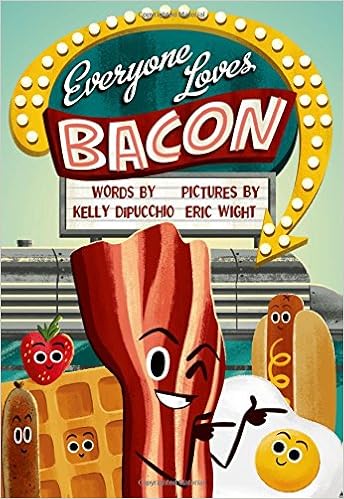
Everyone Loves Bacon by Kelly Dipucchio

Bacon seems to be everywhere these days so it shouldn’t be a surprise that bacon has ended up as the main character in a picture book.  Breakfast foods and other delicacies are personified in this story that tells about Bacon, the most popular food of them all, and how the fame goes to his head.  Bacon tells charming stories, plays the ukulele, and drives a fancy car, but he also forgets all about his friends.  The joke in the end, depicted by an empty plate, shows what really happens to Bacon when everyone loves him.  Bacon lovers will love this one.


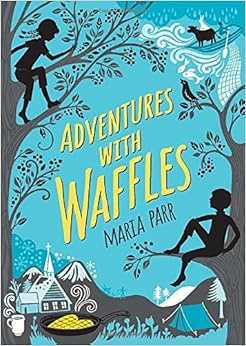
Adventures with Waffles by Maria Parr

This novel written for grades three through five focuses on friendship.  Trille has many adventures with Lena, his friend and neighbor, but he wonders if she really is his best friend.  They have many adventures, some of which end in visits to the hospital, but are always entertaining.  The story addresses other aspects of being a child – the yearning for a dad, the loss of a family member, and the sadness when a friend moves away.  The story is set in Norway, where the author lives, providing a glimpse into life in another part of the world.  


My Professional Reading This Week...


Teaching the Core Skills of Listening and Speaking by Erik Palmer

This book has been on my to-read list for quite some time. This week I finally decided to read it since I have been asked to facilitate a curriculum meeting to help teachers understand the speaking and listening standards and align them to instruction. I thought the book would be a good starting place to grow my own understanding of the Common Core Speaking and Listening Standards and how to teach them.  After reading it, I have found that is has helped me understand the shifts that are necessary in teaching speaking and listening. Palmer explains that rather than simply involve students in discussions, we have to ensure that the discussions are collaborative.  There should be a purpose to the discussion and it should help to move students thinking forward.  Palmer also stressed that listening is not a skill we should take for granted and we have to teach students how to do it so that they truly understand what they are hearing.  Another take away from the book is the distinction Palmer makes between activities and instruction.  We can provide activities that involve speaking and listening, but we won't expand students ability to speak and listen unless we provide instruction on how to be better at speaking and listening.  Erik Palmer has a brief video, called Effective Communication, highlighting some important ideas related to teaching speaking and listening.  This book has been useful in helping me understand the expectations of each of the six speaking and listening standards and has provided me with ideas for instruction to address each standard. 


Saturday, October 3, 2015

Celebrate This Week: Excitement About Books


Thank you to Ruth Ayres at Discover. Play. Build.  She hosts a link-up every week that focuses on the reasons we have to celebrate.  

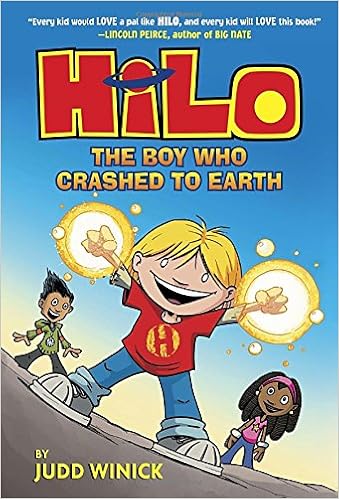
This week I am celebrating excitement about books.  After spending the first month of school administering literacy assessments, I have finally started working with small groups of students to provide reading support.  One of my goals this year is to spread the love of books and motivate my students to read more in school and at home.  I plan to do this by seeking out books I think will interest and excite my students.  I also want to give book talks more often.  In addition, I have been looking for book trailers and videos of authors discussing their books.  I recently read Hilo: The Boy Who Crashed to Earth. This is a graphic novel and by the time I had read the first few pages I knew it was a book my students would love to read.  Through searching YouTube I found a short video of the author, Judd Winick, discussing what the book is about.  I played the video for a group of my students and they were absolutely hooked.  When I asked who wanted to borrow the book all hands were immediately in the air.  I thought one student was going to climb over the table to grab the book out of my hands.  As I explained how I was going to fairly decide who could borrow the book, one student argued, “But I raised my hand first.”  I gave out the book and shortly had a student begging to borrow the second copy.  I appeased the rest of the students by putting their names on a “waiting list.”  As a reading teacher and book lover, I am overjoyed when I see such excitement about a book. It’s not always easy to hook students on a book, but when it happens it is definitely reason to celebrate.