Pages

Monday, September 12, 2016

It's Monday! What Are You Reading?


It’s Monday! What Are You Reading? is a community of bloggers who link up to share what they are reading.  For more information and to find out what other bloggers are reading check out the host blogs: Teach MentorTexts and Unleashing Readers.


What I Read This Week…


How This Book Was Made by Mac Barnett

This book explains the process that an author goes through when creating a book. The book weaves factual information about the process along with a lot of humor and exaggeration. The reader will learn about the process of book creation and the persistence and effort necessary to be a writer. The story is amusing and fanciful, as well, as there is a tiger, pirates, and an eagle all involved in the creation of the book. This is an informative and fun look at how a book is made.


Quinny and Hopper by Adriana Brad Schanen

Quinny is unhappy that her family has just moved, but soon learns there is a boy her age living next door. Although they are very different from each other they soon become friends and begin working together to solve a problem. When the school year begins, they must work through difficulties in their friendship. There are amusing parts to this story of friendship and characters to which many students will be able to relate. There is a sequel, as well. 

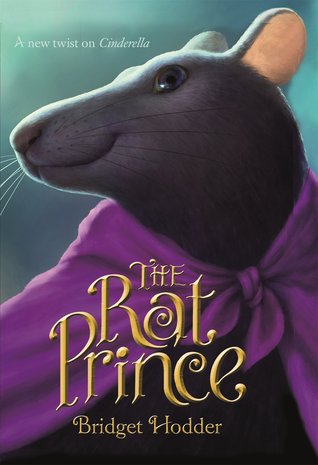
The Rat Prince by Bridget Hodder

This is a twist on the Cinderella tale bringing to life the story of the rats, from the original version, who were turned into coachmen. The story alternates between the perspective of Prince Char, rat prince of the Northern Kingdom, and Cinderella. The rats, in this version of the fairytale, have much more than a minor role in Cinderella's adventure as she attends the ball and finds her prince charming. This is fun, magical, and enchanting retelling.
  

Tuesday, September 6, 2016

Slice of Life: Sharing My Summer Reading Life


Imagine learning to knit from someone who has never picked up knitting needles. Or imagine learning to ski from an instructor who has never put on skis. Or learning to drive a car from an instructor who has never been behind the wheel. I imagine these are not the instructors any of us would choose if we wanted to knit, ski, or drive. When learning a skill, I’m sure we would all prefer someone we consider an expert because they themselves know the skill. They’ve learned it, practiced it, and spent hours engaged in it. A few years ago, I took tennis lessons. I considered my instructor, someone who played tennis, watched others play, and studied the sport, to be an expert. Because my instructor had experience with the game of tennis he could teach me the skill, but in addition, he also had an enthusiasm for the sport that made me eager to learn and get better.  

I was once talking with a second grade teacher and the subject of reading came up. I expected the conversation to take a turn in which we shared what we were currently reading and exchanged must-read titles. I always love a conversation about books, but this one was cut short when the teacher expressed the fact that she doesn’t read. I managed to stifle a gasp, but I don’t think I could hide the expression of disbelief on my face. I have always been passionate about books and reading and up until this moment assumed that all those who teach students to read have this same love. I believe that students who are learning to read also need experts, those who engage in reading themselves and have passion for books, much like my instructor who taught me to be a better tennis player. This to me, is a necessity for developing readers.

This school year just began and I am excited about sharing the titles I have read throughout summer vacation with my students at my school. I have read a handful of books every week so I can talk about books with my students and make recommendations. Just a few days into the school year and I have already started to put books into the hands of students. I was talking with a student who has read and enjoyed Dork Diaries so I gave her a book in the author’s newest series, The Misadventures of Max Crumbly: Locker Hero. When I asked a student who is new to our school about her reading interests and she stated she likes comics and books with action, I went right to the basket labeled “graphic novels” and pulled out Hilo: The Boy Who Crashed to Earth. As she walked away with the book tucked under her arm I said, “I think you are really going to like it.” I have every confidence that she will because I myself have read the book and know it matches with her reading interests.

Every student learning to read should have a teacher who reads. As a reader, I have insight into the reading process that helps me better teach students skills and strategies. As a reader, I am a model for my students. Through the experiences I share about my reading, my students can see what it means to have a reading life and begin to understand the joy in having such a life. Because I read I also have expertise that enables me to match books with readers. I can talk up books that I have read, leaving students wondering about the plot, to hook them into wanting to read them. There are quite a few books that I want to share with my students this year because they are books that I loved and books that I think my students will love (Here is a padlet with some of the books from my summer reading list.) As the beginning of this school year rolls on, I will continue to have conversations with students about their summer reading. In these conversations, I will share with students what I have read during the summer in hopes that they will become excited about books, add titles to their reading lists, and see possibilities for growing their own reading lives.

Monday, August 22, 2016

It's Monday! What Are You Reading?


It’s Monday! What Are You Reading? is a community of bloggers who link up to share what they are reading.  For more information and to find out what other bloggers are reading check out the host blogs: Teach MentorTexts and Unleashing Readers.

What I Read This Week…


Excellent Ed by Stacy McNulty

All of the Ellis children are excellent at something except for Ed, the family dog. Ed tries to be excellent in various ways, but it's not until someone drops half a peanut butter sandwich on the floor that he learns what he is excellent at doing. The alliteration and the humor at the end contribute to the charm of this story. This is a great picture book that shows how we all have our own unique, excellent qualities.

The Infamous Ratsos by Kara LaRue

Louie and Ralphie Ratso are trying to prove they are tough, just like their father Big Lou. They come up with many ways to show they are tough, but everything they do turns out to be an act of kindness. Although the Ratsos are trying to be tough, there is a lesson about goodness. The story has a positive message that's presented in a humorous way. This is a short chapter book appropriate for transitional readers.

Race to the South Pole (Ranger in Time) by Kate Messner

This is the fourth book in the Ranger in Time series, but the first that I've read. The book presents an interesting snapshot into an historical event, an expedition to Antarctica at the beginning of the twentieth-century. Ranger, a golden retriever, has traveled back in time where he befriends Jack Nin, a stowaway on a ship carrying a crew trying to reach the South Pole. Ranger uses his search-and-rescue training to help Jack and other crew members survive. There is action and suspense in this book and it will both entertain and inform young readers. There is information at the end of the book about real-life characters and events that inspired the story. I don't yet have any of the books in this series in my collection, but will definitely add them. 

Monday, August 15, 2016

It's Monday! What Are You Reading?


It’s Monday! What Are You Reading? is a community of bloggers who link up to share what they are reading.  For more information and to find out what other bloggers are reading check out the host blogs: Teach MentorTexts and Unleashing Readers.

What I Read This Week…


The Alligator's Smile and Other Poems by Jane Yolen

Another great collection of poetry by Jane Yolen! Each of these poems about alligators presents an interesting aspect of these fearsome creatures. Along with the each poem is an amazing photograph and a sidebar with factual information. This book of poetry is engaging and interesting for so many reasons. There is variety in the style and format of the poems, one with just seven words. The titles, such as "Kindergarten for Alligators" and "Obituary", are clever and spark curiosity about alligators. The facts include information that would be new to many young readers, such as how the alligator got its name. This book of poetry will make a great addition to a poetry collection because the poems are captivating, but also because it can be used to illustrate how poems can provide information.

The Hole Story of the Doughnut by Pat Miller

If you've wondered how doughnuts were invented, this is the book to read, with its fun and interesting explanation of how the pastry came to be. The book tells the true story of Hanson Gregory, a sailor from Maine, who invented what was first known as the holey cake, to solve a problem sailors had with eating fried cakes that were not fully cooked in the center. The illustrations help to make this an amusing story. I'm sure young readers will enjoy learning how one of their favorite treats was invented. 

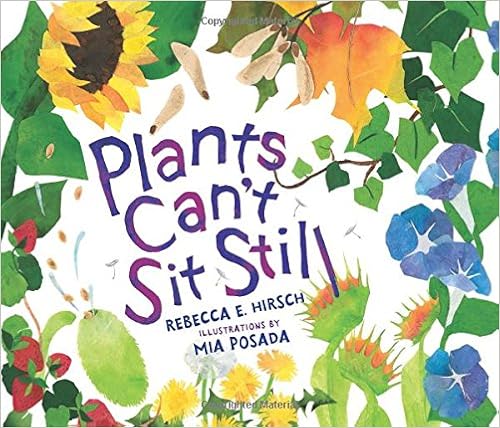
Plants Can't Sit Still by Rebecca E. Hirsch

This is an informational book that explains the ways that plants move even though they appear to sit still. There are descriptions of the actions of various plants along with illustrations of them. Some plants wiggle, some reach, some tumble and some even explode. The text has few words on a page, as sentences often stretch across pages, creating a poetic, rhythmic feel. The layout of the text is interesting, as well, with the action words highlighted in different colors from the other words on the page. The last few pages of the book tell the names of the plants that are pictured throughout the book along with some additional facts. This book presents information in an engaging and interesting way. Readers will learn information about plants, but also think about them in different ways as they consider their movements.

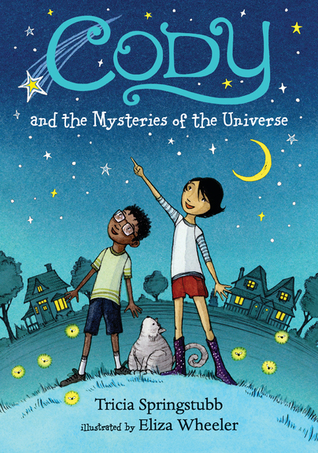
Cody and the Mysteries of the Universe by Tricia Springstubb

This is an enjoyable sequel to Cody and the Fountain of Happiness. Cody is excited that her friend Spencer has moved into the neighborhood. They soon discover that there are two new girls living next to Spencer who aren't quite so friendly. The story shows the challenges of trying to get along with others. It also shows the diversity that exist among families. I think fans of the first Cody book will enjoy this one as well.

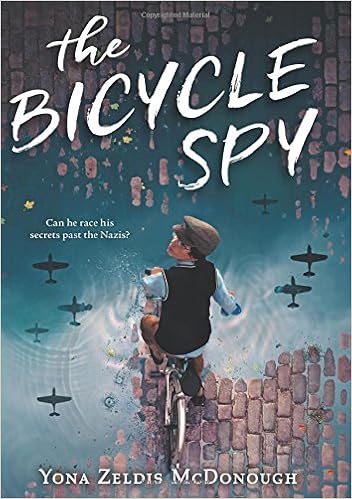
The Bicycle Spy by Yona Zeldis McDonough

Marcel lives in small town in France during World War II. Even though his town is part of the Free Zone, German soldiers have started to appear. Marcel delivers bread for his parents, who own a bakery, and when he discovers a note in a loaf of bread he realizes they are part of the French Resistance. Marcel befriends a new classmate, with who he shares a love of bicycling, and he soon learns her family is in danger. In spite of the danger, Marcel wants to help. Friendship and courage are at the heart of this novel. Marcel's story is exciting and the novel would interest those wishing to gain insight into a major historical event.

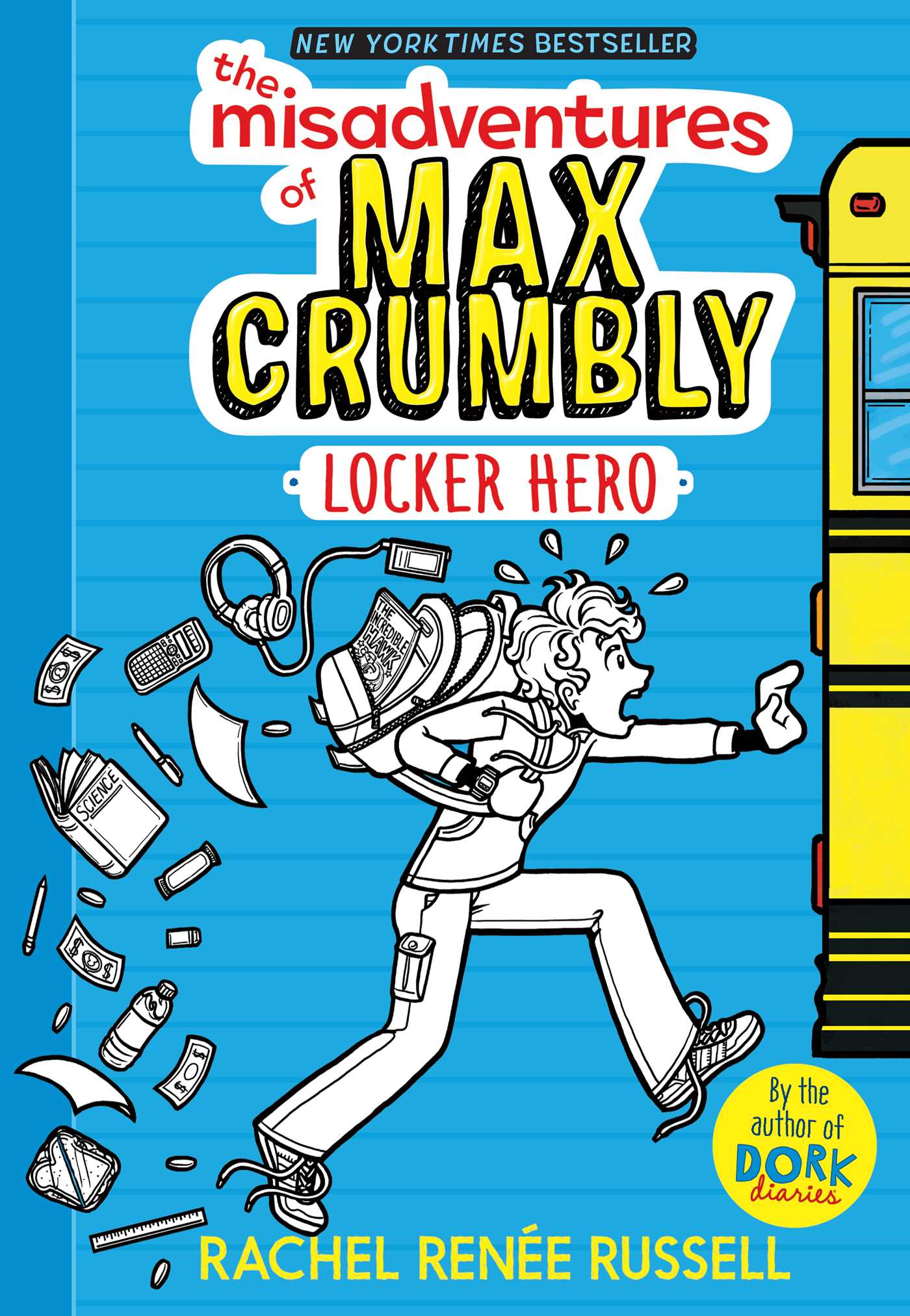
The Misadventures of Max Crumbly 1: Locker Hero by Rachel Renée Russell

This is a new series by the author of Dork Diaries, which many of my students love. This is the adventure of Max, who's stuffed inside a locker, told in his voice. There is lots of action, much of it rather silly, that fans of books, such as Dork Diaries and Diary of a Wimpy kid will probably find humorous and entertaining. The cliffhanger at the end left me disappointed because I really wanted to Max's problem to be resolved, but I'll have to wait until the second book. I'm sure readers will be eagerly awaiting the second book, as well, after reading this one.

Wednesday, August 10, 2016

Learning to Screencast

I participated in a virtual book club this summer, #cyberpd, in which a group of educators discussed a professional text. Many of those participating created screencasts as a way of reflecting on their learning. The screencasts were amazing. They were reflective, but also engaging. As I watched each screencast, my desire to create my own grew. But, how, I thought to myself. I couldn’t possibly possess the technology skills necessary to create a screencast worthy of sharing with others.

A few weeks later, I attended the Summer Institute inDigital Literacy at the University of Rhode Island. I had signed up for this institute in hopes of learning more about digital literacy and how to integrate digital tools into my instruction. During the institute, I was introduced to many digital tools that I was not previously familiar with. One of the tools that I had the opportunity to explore was Screencast-O-Matic. I worked with a small group to create a screencast using this tool. This was the perfect opportunity to begin figuring out the whole business of screencasting.

Screencast-o-Matic is basically a tool for recording what is on the screen of one’s digital device. This tool can be used to create videos for use as tutorials or for presentations. There is a lot of potential for the use of this tool in my professional work. I can imagine ways that I can use it to expand my own learning and to enhance others’ learning. Here are a few of my ideas for using this tool:

  • Personal Reflection: Like educators in the virtual book club I participated in this summer, I can create screencasts to reflect on my learning of professional text. When learners explain a topic they actually learn more about it. These screencasts can also be posted on my blog so I can share my learning with others.
  • Flipped Instruction: I can also use screencasting tools to create videos related to the content or strategies that students are learning. Students can watch these videos when not engaged in direct instruction so they can continue their learning. Videos can even be shared with parents so they have an understanding of the instructional strategies students are learning.
  • Student Presentations: Students can create their own screencasts related to content they are learning to share with their peers. This will involve students in the process of creating through digital tools and by teaching others through a screencast they will also enhance their own learning of content.

After the institute, I decided to experiment more with screencasting so I created one all on my own. This screencast tells about my reading history. In order to teach students to read, I think it’s first important to know something about them as readers. One way to get to know students as readers is to ask them to reflect and share the role that reading has played in their lives. I created a screencast of my reflection, my reading history, to share with students and to serve as a model for the type of reflection I would like them to do regarding their reading. Check out my screencast at the link below:
This is my first ever screencast so I anticipate that they will get better. Screencast-O-Matic will be a useful tool in creating screencasts that I am looking forward to using as both, a learner and a teacher. The tool is pretty user friendly and it didn’t take me much time to create a video. The tool is free although there is version with more options available for a cost. There are also other screencasting tools available that I may check out in the future for additional screencasting capabilities. I'll just have to see how far my technology skills can take me.

Picture Book 10 for 10: Picture Books About Books


For the second year, I am participating in the annual Picture Book 10 for 10 event hosted by Reflect and Refine: Building a Learning Community and Enjoy and Embrace Learning.  Bloggers who participate post a list of ten must-have picture books. As someone who loves to read, I always enjoy books about books. So, this year my list includes picture books about books. Each of these books celebrates the joy of books and the power of reading. 

Ten Picture Books About Books


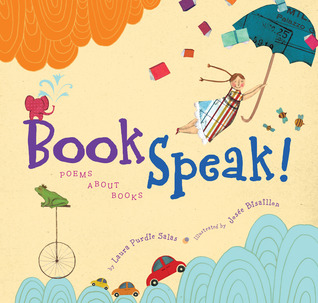
BookSpeak! Poems About Books by Laura Purdie Salas

This is a collection of poems all about books. The poems are full of voice as each is written from the perspective of a book, or something book related. Some of the voices the poems take on include that of a cliffhanger, a book jacket, and a book taken on vacation. The poems vary in style, format, and length which makes turning the page to read each new poem interesting. Each of the poems is a fun and playful celebration of books.


Dog Loves Books by Louise Yates

Dog loves books so much that he opens a bookstore (as I'm sure many book lovers would love to do!). Dog's bookstore is not very busy so he spends his time reading. Through his reading he takes imaginary adventures to other places. This book not only shows the joy of reading, but also the fun of recommending and sharing books.


The Incredible Book Eating Boy by Oliver Jeffers

When I read this book to my students they always find it quite funny. Henry loves books so much that he eats them. He eats more and more and gets smarter and smarter, but this turns into a problem when he starts to get ill. Soon, Henry learns he can also get smart by reading books. My students especially love the last page of the book which, with its missing piece that makes it appear as if a bite was taken out of it, reveals a surprise ending. The story is clever and funny with an important message about reading in order to gain knowledge.


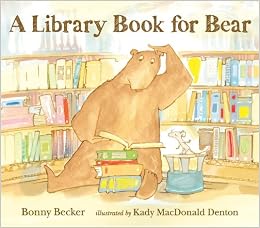
A Library Book for Bear by Bonny Becker

Bear agrees to go to the library with Mouse even though he insists that he has all the books he needs at home. Mouse tries to show Bear how exciting the library is, but Bear only grumbles. When Bear listens in on story time, he discovers there is a book at the library that he can't resist. Mouse's persistence along with Bear's grumpy attitude make this both a sweet and humorous read.


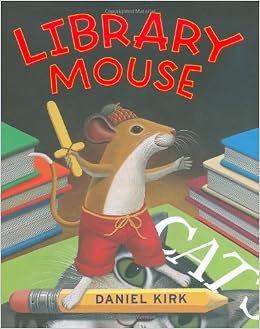
Library Mouse by Daniel Kirk

Sam, a mouse who lives in the library, loves books so much he decides to write his own. The children enjoy the books and want to find out who has written them so they plan a Meet the Author Day. Sam is a little shy so instead of revealing himself he helps the children learn that they can be authors themselves. This book may inspire students to write their own books.


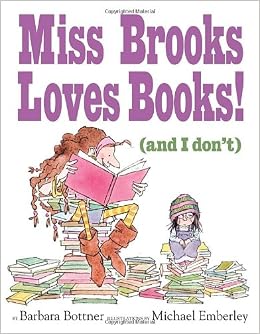
Miss Brooks Loves Books! (and I Don't) by Barbara Bottner

This is a story of Missy, a reluctant reader who is not interested in any of the books in the library. Miss Brooks, a librarian who loves books, has declared Book Week and Missy must find a book she loves to share with her class. This proves challenging and terrifying to Missy until her interest in warts leads her to the perfect book. The message of this book reminds me of Frank Serafini's quote, which is one of my favorites: "There is no such thing as a child who hates to read; there are only children who have not found the right book."


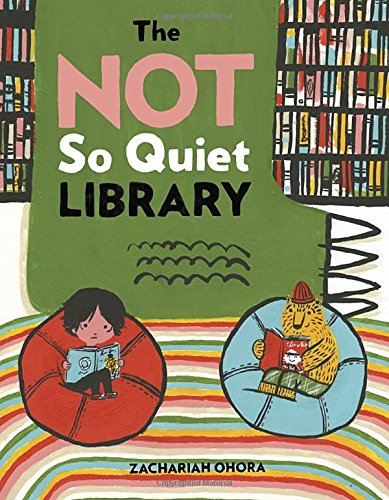
The Not So Quiet Library by Zachariah Ohora

Oskar and Theodore are enjoying quiet time at the library until they are interrupted by the "Boom! Crash! Growl!" of a monster. Oskar and Theodore teach the monsters that books are not for eating, but then find they are in danger of being eaten themselves. Luckily, for Oskar and Theodore, story time begins just in time and the monsters learn how much they enjoy listening to a good book. The monsters, although menacing, bring humor to the story.


Otto the Book Bear by Katie Cleminson

Otto loves to explore beyond the pages of his book, but one day when he comes to life his book is shipped away and he can't return. Otto goes off on an adventure and realizes how much he misses the pages of his book. Otto happens upon a library where he finds a friend and a new book to be his home. This is a unique story that shows the wonder of libraries.


The Summer Nick Taught His Cats to Read by Curtis Manley

Nick decides to teach his cats, Verne and Stevenson to read. He successfully teachers Verne who becomes an avid reader, but Stevenson remains uninterested. When Nick discovers Stevenson's drawings he uses them to write a book that Stevenson will enjoy. This is a cute and humorous book that helps readers to see a connection between reading and imagination.


Waiting for the Biblioburro by Monica Brown

Ana has only one book and lives in a village in which there is no longer a teacher for the children who live there. Her wish for more books is granted when outside her house one morning she discovers a moving library, a Biblioburro. This story is inspired by the real-life librarian, Luis Soriano Bohórquez, who travels with a donkey-drawn cart to bring books to remote areas of Columbia. The story celebrates the efforts of those who bring the joy of literacy to those who otherwise couldn't experience it. A related book, Biblioburro: A True Story From Columbia by Jeanette Winters, tells about the experience of Luis Soriano as he makes the difficult journey across the countryside with his donkeys and his books. Both books show that one person can make a difference in the literacy lives of others. 

Tuesday, August 9, 2016

Slice of Life: The World Needs More Readers

Slice of Life is hosted by Two Writing Teachers.
One night last week, I spend the entire night reading. It was right after dinner, when I started a novel I had just downloaded to my Kindle. I spent hours on my couch with the novel that night. My bedtime approached so I moved upstairs to my bedroom, but I could not go to sleep until I finished the book. I. Could. Not. Put. It. Down. About one a.m., way past by bedtime, I swiped to the last page of the book. I don’t often have such a long stretch of time that I can devote to reading, but this book immersed me in someone else’s life story, providing me a temporary, but rewarding break from my own life.

After reading the book, I researched the author and discovered that the book is a genre called new adult fiction. According to my online research, new adult fiction consists of novels with a protagonist in the 18-30 year old range. I’m about a decade past this age range, so new adult fiction is new to me. I probably would not have ventured into reading this genre or book if it were not for a tweet which then led me to check the reviews. The novel lived up to all that reviewers had written about it. The story line got pretty intense. It made me wonder, “What would I do?” It moved me to tears. It made me think deeply.

I could not put the book down so I read it cover to cover in one sitting. I could not put it down because I was so immersed in the story and the dilemma of the main character that I just had to find out what happened. I could not put it down because my mind was reeling with emotion. I could not put it down because I was inside the story, experiencing it from deep within its core, from a place where the story, although I have never actually lived it myself, now became a part of me and who I am as a human being. 

Days after reading this book, I was still thinking about it. I thought about the experiences of the characters in the book and what it meant for my own life. I learned something about myself and something about others from reading this book. I have a better understanding of a situation even though I have never actually lived throught it. I now know that sometimes what appears to be weakness is really strength. I will be more empathetic. I will judge less. I am forever changed by this one book I read. I am changed by all the books I have ever read.

There are lots of numbers and statistics out there about Americans and book reading. I’m sure some pretty dismal numbers would turn up if I did a google search: How many books does the average person read? How many Americans have read a book in the last year? How many college graduates have read a book since graduation? The statistics indicate that there are probably people who have not experienced the I-could-not-put-it-down moment while reading a book. Some people may not know what it is like to be inside a story. Some may not even have read a book that was life-changing. Some may not have read a book and then lived with the characters for days, weeks, months, a lifetime. There are people who can read, but just don’t. This is sad and a way of being that I find hard to imagine.

I learn and change one fiction novel at a time. I have a core, rock solid belief that reading makes me a better person. Reading can make us all better people. I’m sure I’m not the only one who watches the news or reads the posts that pop up in Facebook feeds lately and thinks that the world needs more kindness, more empathy, more compassion. What the world needs is more readers. If reading can change me, it can change us, it can change the world.